Apps, Webhooks, and User-Facing Surfaces
Document information
- Canonical URL:
/docs/05_apps-webhooks-and-surfaces/00_introduction - Version:
2026-08-13 - Tags:
webapps,webhooks,callbacks
This section helps you build and operate user-facing experiences in Tealfabric, including WebApps, webhook integrations, and callback-based process interactions. It is designed for teams that need reliable request handling, predictable response behavior, and clear ownership between frontend surfaces and backend automations. Use this section when you are exposing forms, pages, or API-driven interaction points to users or external systems.
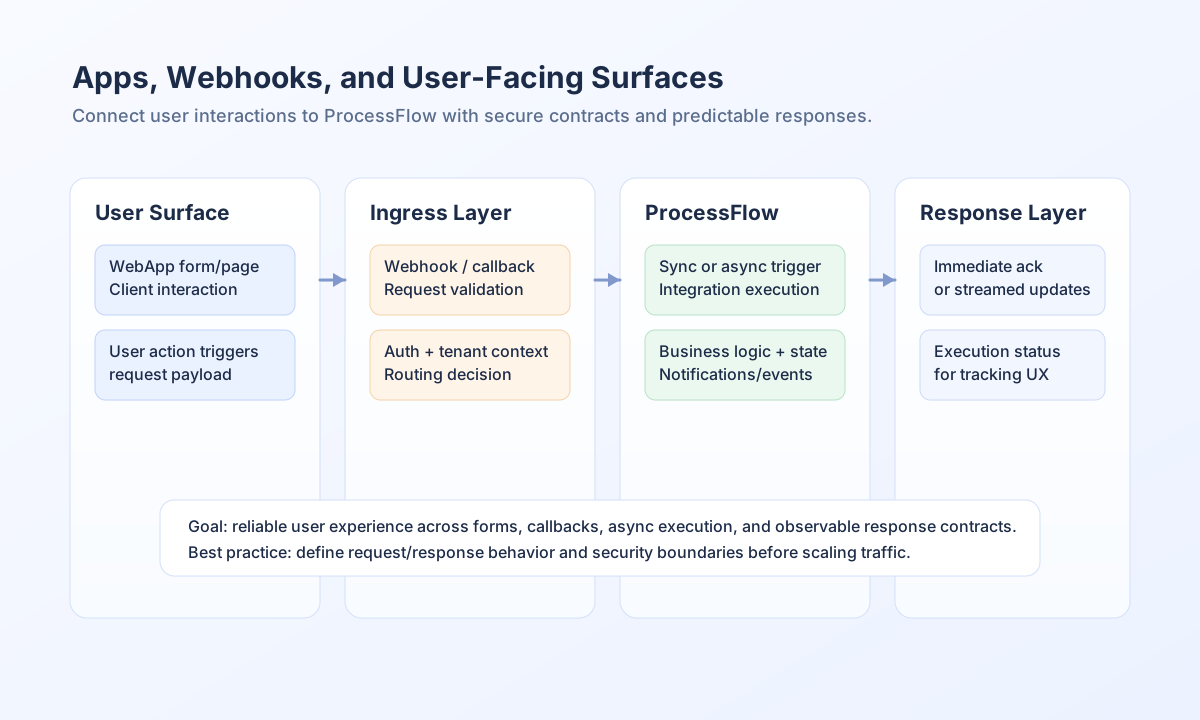
What you will learn here
You will learn how WebApps connect to ProcessFlow so submissions and actions trigger the right backend behavior without breaking user experience. You will also learn webhook and callback patterns for inbound events, outbound notifications, and asynchronous request handling. Together, these patterns help you design interfaces that remain responsive while still supporting long-running or integration-heavy workflows.
The guides in this section focus on practical implementation decisions rather than internal platform details. That includes API usage, function behavior, realtime communication, and safe release patterns for production-facing surfaces.
Suggested reading order
If you are starting fresh, begin with the WebApps user and API guides so you can establish a stable baseline for creating, updating, and publishing WebApp assets. Next, review async process-trigger and realtime communication guidance to handle long-running operations and stream-based UX requirements. This progression moves from core setup to performance and reliability concerns in a way that mirrors real delivery work.
Key guides in this section
- WebApps API Documentation
- WebApps Authentication
- WebApps: admin-only access and DataPool viewers
- AI adoption advisor
- WebApp API Usage Guide
- WebApp Functions Guide
- WebApps and ProcessFlow Integration Guide
- WebApp Async Process Trigger Guide
- Real-Time Communication Guide
See also
- Automations and ProcessFlow Introduction
- Data and Documents Introduction
- Security, Privacy, and Compliance Introduction
User-facing surfaces are most successful when request contracts, backend triggers, and security expectations are defined together. With this foundation, your team can ship interactive experiences that stay fast, traceable, and dependable in production.