Automations & ProcessFlow
Document information
- Canonical URL:
/docs/02_automations-and-processflow/00_introduction - Version:
2026-05-13 - Tags:
processflow,automation,sandbox
This section helps you design, run, and operate ProcessFlow automations with confidence. You will learn how to model process steps, run flows synchronously or asynchronously, and apply operational controls that keep execution safe at scale. The goal is to help you move from working prototypes to production-ready automation.
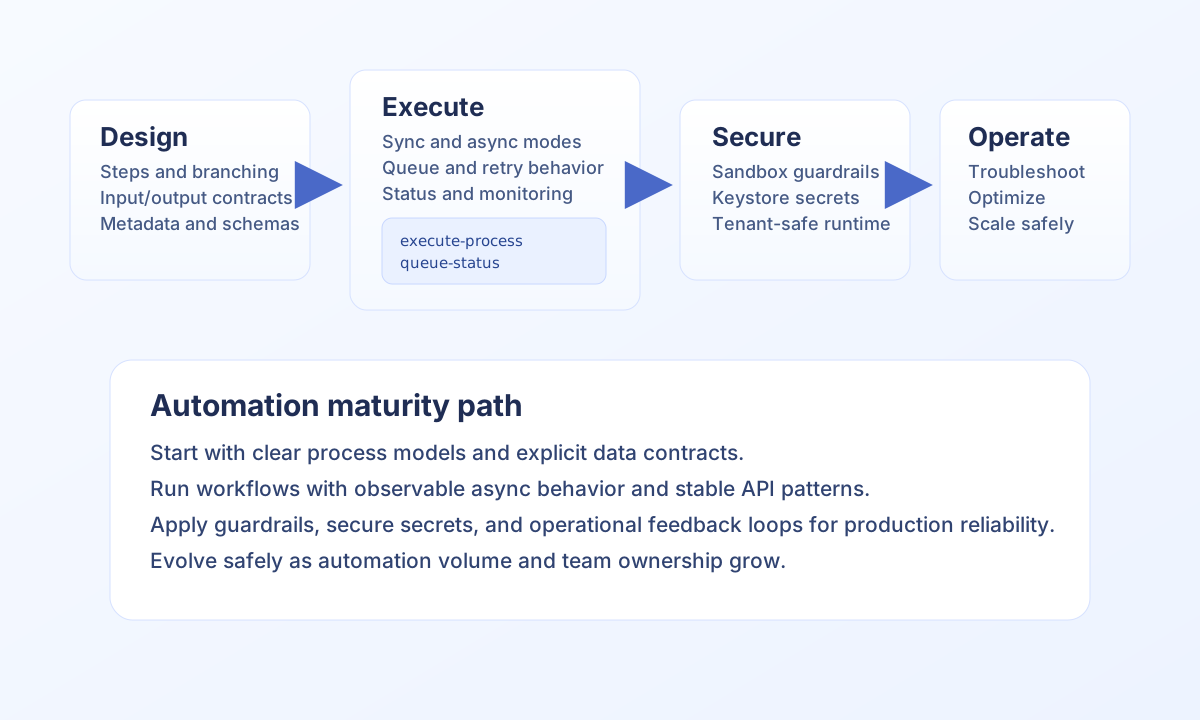
What you will learn in this section
You will start with process design foundations, including step sequencing, branching decisions, and metadata contracts that keep process inputs and outputs explicit. From there, the guides cover runtime behavior such as queued execution, retries, and execution status patterns used in WebApps and API-driven integrations.
You will also find practical guidance for sandbox guardrails, secret handling with keystore, process-level environment configuration, and document-oriented automation patterns such as OCR pipelines. Together, these topics provide the baseline needed to build automations that are reliable, secure, and maintainable.
How to navigate these guides
Material in this section moves from how steps run and what you return from them, through sandbox rules and secrets, into APIs and operational behavior. If you are new to ProcessFlow, read the process step code guide and sandbox guardrails next, then the keystore guide before you connect sensitive integrations. If you are troubleshooting, start with the ProcessFlow API documentation, then queue and async behavior on the pages linked from your failing workflow.
Suggested next reading
- ProcessFlow triggers guide
- Process environment variables
- ProcessFlow API documentation
- Process step code guide
- Sandbox guardrails
- Process sandbox
tfAPI reference - ProcessFlow keystore
- Writing step code introduction
- Process flows as custom AI agent tools
Use this section as your operational baseline: design clearly, secure inputs and secrets, and validate execution behavior before releasing critical workflows.