Security, Privacy, and Compliance
Document information
| Field | Value |
|---|---|
| Canonical URL | /docs/09_security-privacy-and-compliance/00_introduction |
| Version (published date) | 2026-05-08 |
| Tags | security, compliance, api-keys |
Summary
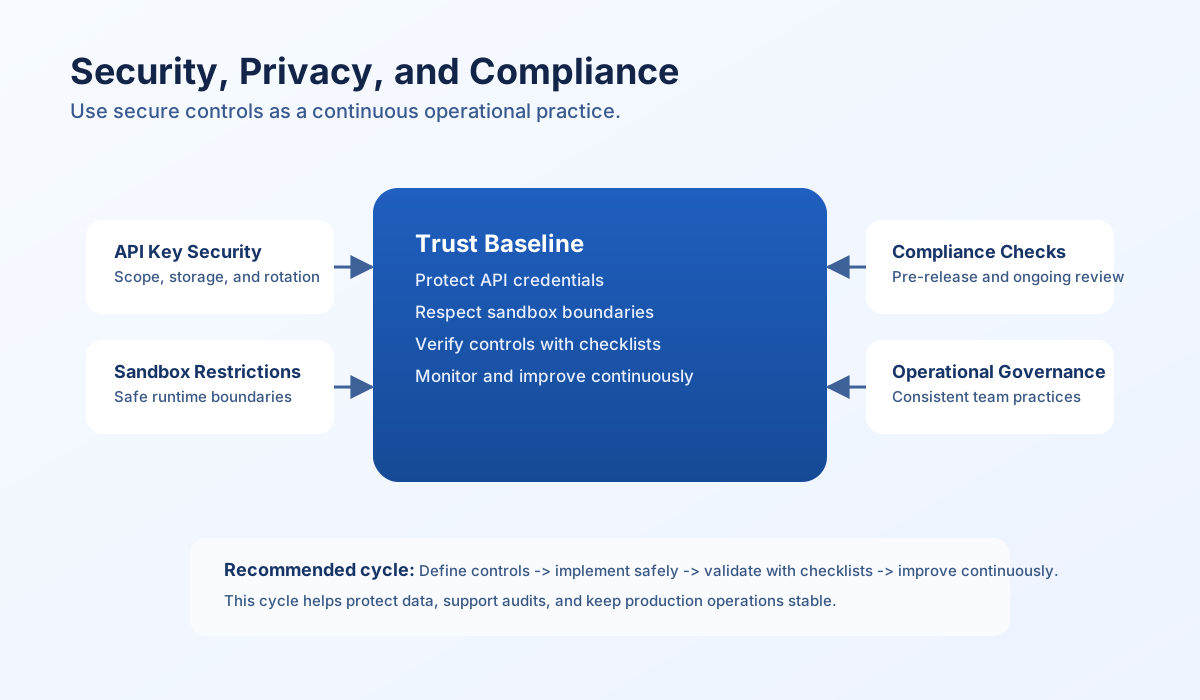
This section explains how to use Tealfabric securely while meeting privacy and compliance expectations in daily operations. It focuses on practical controls such as API key handling, tenant single sign-on, workspace roles, runtime boundaries, and verification checklists that help teams reduce risk. Use these pages as your starting point when you are designing, operating, or reviewing production workflows.
Why this section matters
Security and compliance decisions influence every stage of a Tealfabric implementation, from initial setup to long-term maintenance. Clear guidance on key management, access boundaries, and process controls helps you prevent accidental exposure, reduce operational mistakes, and keep audit preparation manageable. Starting with these fundamentals makes later automation and integration work safer and easier to govern.
This section is written for teams that need reliable, repeatable practices rather than one-off fixes. You can use it to align engineering, operations, and governance workflows around the same baseline expectations. Consistent use of these standards improves trust in both platform behavior and business outcomes.
What you will find here
You will find practical guidance for handling API credentials safely, including scope awareness, storage discipline, and rotation habits. You will also find documentation on sandbox and API restrictions so you can understand what process code is allowed to do and where boundaries are intentionally enforced. These controls are central to safe automation in multi-tenant and production environments.
You will also find workspace user-role guidance so Tenant admins can assign Tenant admin, User, Viewer, and Webapp user with a clear picture of what each role can do. Tenant admins can configure organization single sign-on (Google Workspace or Microsoft Entra ID) from Organization Settings so people sign in with the company identity provider. Pair that with security and compliance checklists that support reviews before release and during ongoing operations. These checklists help teams validate that key safeguards are in place before issues become incidents. Used regularly, they create a predictable security posture across projects and releases.
Related documentation
Security controls are most effective when you apply them directly in implementation and operations workflows. To connect this guidance with the rest of the library, use the pages below as your next step.
- Workspace user roles:
/docs/09_security-privacy-and-compliance/15_user-roles - Tenant single sign-on:
/docs/09_security-privacy-and-compliance/12_tenant-sso-setup - Automations and ProcessFlow:
/docs/02_automations-and-processflow/00_introduction - API for developers:
/docs/08_api-for-developers/00_introduction
Final recommendation
Use this section as your baseline whenever you create new integrations, update runtime logic, or review production readiness. Treat secure key handling, sandbox-aware implementation, and checklist-based verification as standard operating practice, not optional hardening. This approach helps you protect data, support compliance requirements, and keep Tealfabric environments dependable over time.