Tealfabric Security Checklist
Document information
| Field | Value |
|---|---|
| Canonical URL | /docs/09_security-privacy-and-compliance/05_security-checklist |
| Version (published date) | 2026-09-12 |
| Tags | security, compliance, reference |
Summary
Use this checklist to run consistent security reviews before release, during routine operations, and after incidents. It is designed for practical execution by engineering, operations, and compliance teams that need clear pass/fail controls. Regular use helps reduce risk, improve audit readiness, and keep Tealfabric environments stable.
How to use this checklist
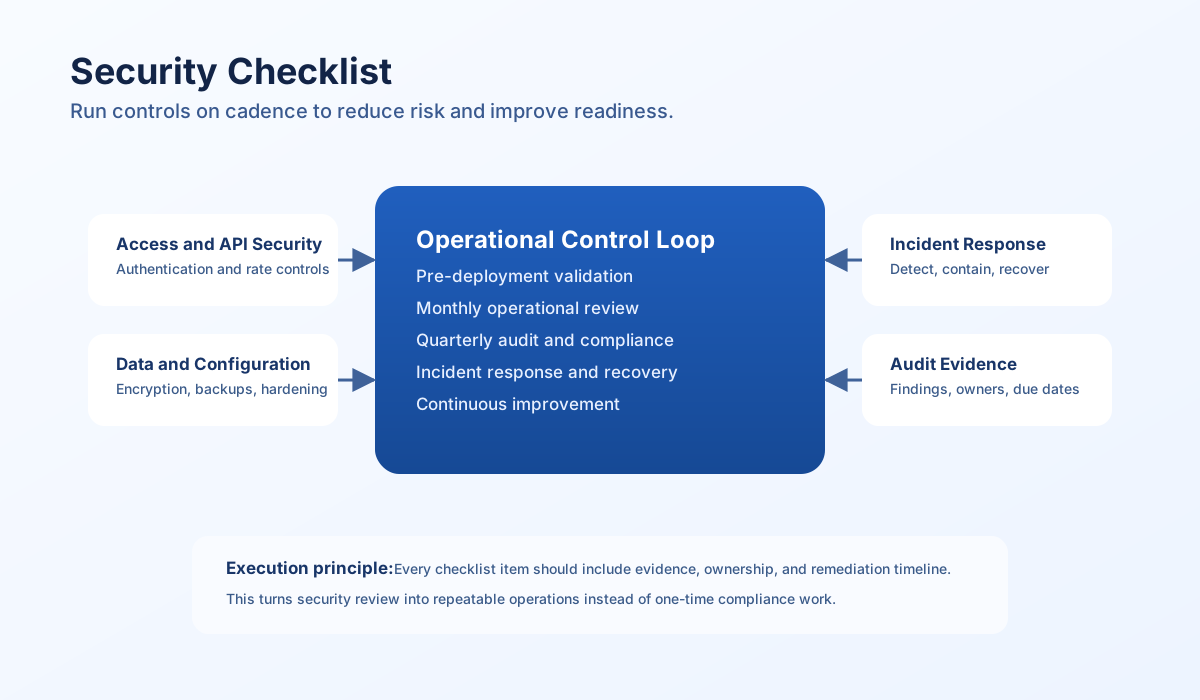
This page is structured by review cadence so you can apply the right controls at the right time. Complete pre-deployment checks before major releases, run monthly and quarterly reviews on schedule, and use the incident section immediately when a security event occurs. Keep evidence for each check so audit and remediation work remains traceable.
If an item cannot be completed, record the exception with owner, reason, risk level, and target remediation date. This keeps unresolved risks visible and prevents checklist completion from becoming a box-ticking exercise. A checklist is only useful when it drives action and follow-through.
Pre-deployment checklist
Use this section before shipping production changes that affect authentication, data handling, or external access. These controls help prevent common exposure paths before they reach runtime.
Authentication and authorization
- All API endpoints enforce authentication.
- Access control is role-based and tenant-isolated.
- Privileged roles are limited, reviewed, and justified.
- Session and token validation rules are enforced.
- If the tenant uses SSO, a Tenant admin configured it in Organization Settings → Single sign-on, tested the connection, and enabled the provider.
- SSO allowed email domains are listed, unique to one enabled provider, and match the corporate IdP.
- Tracked source, comments, and SQL snapshots contain no live tokens (GitLab personal access tokens, private keys, webhook secret paths).
- Production JWT and WebApp signing secrets are unique per environment and are not the placeholder strings from
backend-next/.env.defaults. Operators usedocs/RELEASE_SECURITY_GUIDELINES.mdin the application repository.
Input and output protection
- User input is validated against expected formats and limits.
- Output encoding and sanitization are applied where required.
- File uploads enforce type, size, and content restrictions.
- Injection and script execution risks are mitigated.
API and transport security
- HTTPS is enforced for all production traffic.
- Rate limiting and abuse controls are enabled.
- CORS and security headers are explicitly configured.
- Error responses avoid exposing sensitive internals.
Monthly operational review
Run this review on a fixed schedule to detect drift from your intended security posture. Monthly checks focus on access behavior, authentication anomalies, and API usage patterns that may indicate misuse.
Access and identity review
- Access logs are reviewed for unusual patterns.
- Failed authentication spikes are investigated.
- Cross-tenant isolation behavior is verified.
- Privileged-user activity is reviewed and approved.
API and runtime review
- Unauthorized API attempts are identified and triaged.
- Rate-limit violations are reviewed for abuse signals.
- Security-related error logs are reviewed for trends.
- Expired sessions and token handling behavior are validated.
Quarterly security and compliance audit
Use quarterly audits for deeper control verification and policy alignment. This review should combine technical evidence, policy checks, and remediation tracking.
Platform and data controls
- Dependency vulnerability status is reviewed.
- Backup and recovery controls are tested.
- Encryption and data-access controls are validated.
- Data retention and deletion rules are verified.
Compliance evidence
- Audit trails are complete and retrievable.
- Security policies match current operations.
- Open findings have owners and due dates.
- Policy exceptions are documented and approved.
Incident response checklist
Use this sequence during active security events to keep response structured and auditable. Work from detection to containment, then close with corrective action and documented learning.
Detection and triage
- Incident timeline and indicators are documented.
- Scope, affected systems, and potential impact are assessed.
- Severity is assigned and response ownership is clear.
Containment and remediation
- Threat vectors are contained or blocked.
- Affected credentials, sessions, or tokens are rotated or revoked.
- Temporary protections are applied where needed.
- Permanent remediation actions are planned and tracked.
Recovery and review
- Stakeholders receive status updates and closure summary.
- Post-incident review identifies root causes and gaps.
- Runbooks, controls, and training are updated from findings.
Monitoring, testing, and improvement
Security posture stays strong when monitoring and testing are routine, not occasional. Use this section to maintain visibility, validate defenses, and improve controls over time.
Monitoring and alerts
- Authentication, API, and security events are centralized.
- Alert thresholds are tuned and periodically tested.
- Escalation paths are documented and exercised.
- Log retention meets policy and audit needs.
Security testing
- Vulnerability scans run on a defined schedule.
- Penetration testing findings are prioritized and remediated.
- Security-focused code review is part of change review.
- Regression checks confirm that fixes remain effective.
Continuous improvement
- Security KPIs are defined and tracked over time.
- Review findings create actionable backlog items.
- Lessons learned are incorporated into standards and runbooks.
- Checklist content is reviewed and updated quarterly.
Final recommendation
Treat this checklist as an operational control document, not a one-time audit artifact. Complete it with evidence, owners, and due dates so unresolved risks stay visible and actionable. Consistent use across releases and review cycles creates a stronger, more predictable security posture for Tealfabric.