Tealfabric IO v1.0 Release Notes
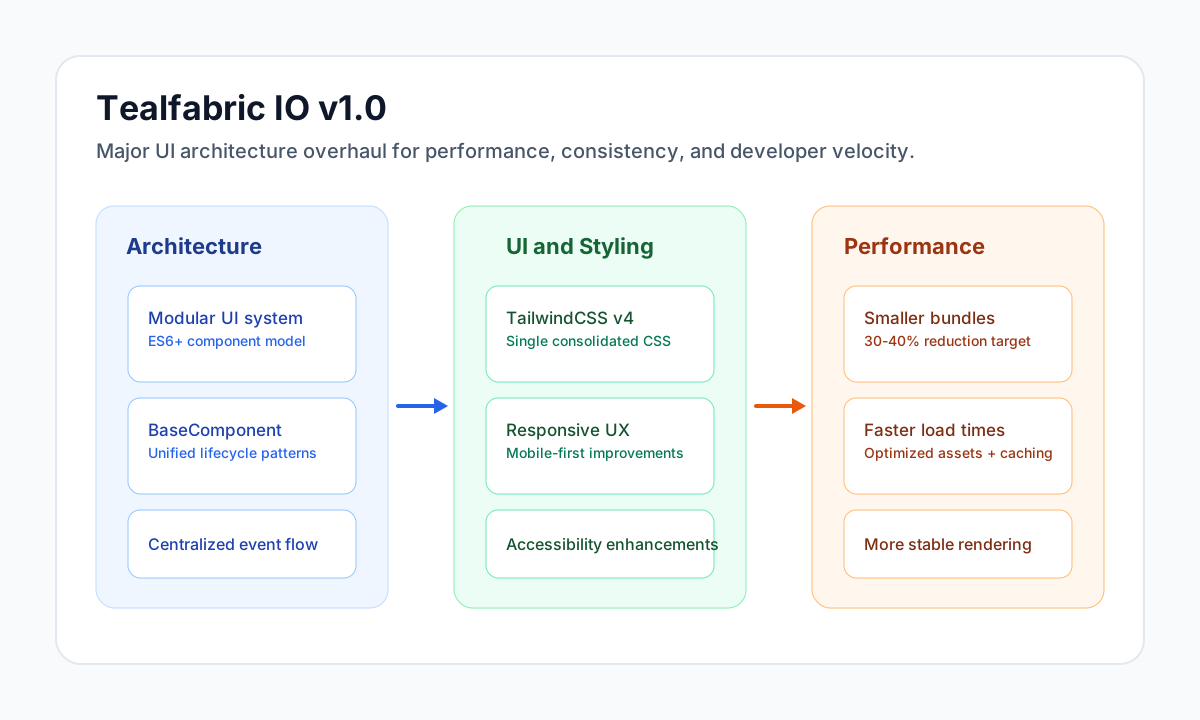
Tealfabric IO v1.0.0 marks a major milestone with a full UI architecture overhaul focused on performance, maintainability, and consistent user experience. This release establishes the baseline for modern component-driven development and smoother day-to-day usage across desktop and mobile screens.
Document information
| Field | Value |
|---|---|
| Canonical URL | /docs/10_releases-and-changes/05_release-notes-v1-0 |
| Version (published date) | 2026-05-08 |
| Tags | releases, changelog, reference |
| Release date | September 11, 2024 |
| Version | 1.0.0 |
Release highlights
Version 1.0 introduces a modular frontend foundation with standardized component lifecycles, centralized event handling, and cleaner asset delivery. These improvements reduce complexity in the codebase while improving responsiveness in user-facing workflows.
The release also modernizes styling and build behavior through TailwindCSS v4 adoption and optimized bundling. As a result, users get faster load times and developers get a more predictable development environment.
Architecture and platform updates
The UI layer now follows a component-first architecture built around a shared BaseComponent pattern. This standardization improves consistency across navigation, chat, profile, platform, and entity-management interfaces.
Build and runtime tooling were updated to support smaller bundles, better cache behavior, and improved debugging support. Together, these changes reduce frontend overhead and improve deployment reliability.
- Introduced modular ES6+ component architecture and unified lifecycle patterns.
- Standardized event-driven UI behavior with centralized event management.
- Migrated to TailwindCSS v4 and consolidated styling into a single optimized bundle.
- Improved webpack build outputs, asset hashing, and source-map quality.
User experience improvements
The v1.0 interface is more responsive and mobile-friendly, with improved navigation flow and better visual consistency across breakpoints. Accessibility and error messaging were also improved to make workflows easier to understand and recover when issues occur.
These updates are especially noticeable in navigation, chat interaction, and profile-related views where layout and interaction consistency matter most.
- Improved responsive behavior with a mobile-first design approach.
- Improved navigation patterns with SPA-style interactions.
- Improved accessibility labeling and interaction clarity.
- Improved user feedback and error messaging across major screens.
Fixes and migration notes
This release resolves several foundational UI issues, including HTML structure problems, CSS conflicts, component initialization inconsistencies, and API integration alignment. These fixes improve stability and reduce UI regressions during normal usage.
For developers, legacy JavaScript was moved to archive/legacy-js/ and initialization/event patterns were standardized. For users, no breaking functional changes were introduced, but performance and responsiveness improved noticeably.
Performance impact
Asset optimization and architectural cleanup reduced overall CSS/JS footprint by approximately 30-40%. This directly improves page-load behavior, rendering responsiveness, and memory usage in larger sessions.
Looking ahead
After v1.0, planned priorities include deeper user-management functionality, advanced theming controls, interactive component testing workflows, and expanded API documentation. These initiatives build on the v1.0 architecture baseline and continue the focus on usability and reliability.